
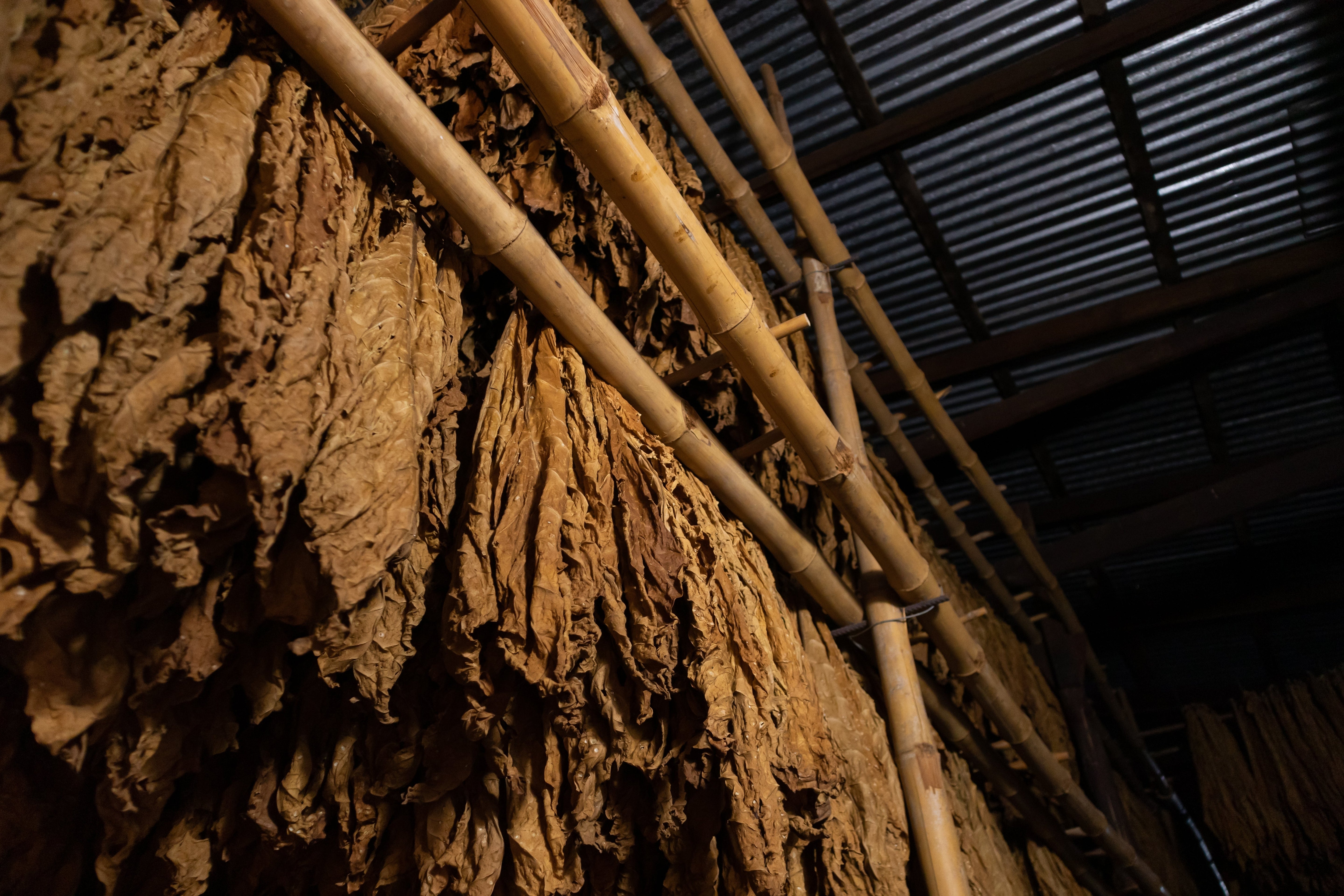
The use of dried tobacco leaves has a long tradition, whether for oral consumption products, ceremonies, or even as insecticides for pest control. The process from harvest to finished product is complex and requires several steps. Here, we want to explain why drying tobacco is necessary, what types of drying exist, and how you can quickly dry wet tobacco.
Why is tobacco dried?
Drying the leaves is an essential step in the production of tobacco products such as cigarettes, Snus and chewing tobacco. This process changes the chemical composition of the leaves and prepares the product for further processing. In short, the drying process serves to reduce the plant's water content (by an average of 80%) and to bring out the flavors. Additionally, drying also extends the product's shelf life.
Oxidation causes the leaves to change color from green to brown as they gradually break down chlorophyll. In addition to chlorophyll, the levels of protein, sugar, starch, and nicotine are also reduced. The drying process usually takes several weeks before the next step, leaf fermentation, begins.
What are the steps involved in drying tobacco?
The sequence of steps for drying tobacco varies depending on the drying method. Generally, these methods are divided into artificial and natural drying. Air drying and sun drying are natural processes, while fire drying and pipe drying are artificial. They differ as follows:
Air Drying
Air drying is the longest method of water removal, as this process can take up to twelve weeks. After harvest, the leaves are hung in a wooden barn and dried without the use of artificial heat. To ensure the leaves dry evenly, workers must constantly monitor humidity and sunlight exposure.
Sun Drying
Unlike air drying, the tobacco leaves are dried directly in the sun without any covering. This process takes about 30 days, and the leaves develop a spicy flavor. Tobacco for pipes is often sun-dried, for example.
Pipe drying
In this process, the heat comes from an artificial source, such as hot air or steam. This type of drying is the fastest and usually takes no more than five days. Tobacco products of this type usually have a medium nicotine level. Nicotine content.
Fire drying
In fire drying, the leaves are hung over a wood fire and exposed to smoke continuously. Depending on the manufacturer, this can take anywhere from a few days to several weeks. Tobacco products of this type have a high nicotine content and a smoky aroma.
What to do if my tobacco gets wet at home
If you have bought a large amount of tobacco that accidentally got wet at home, you can dry it yourself using simple methods. Wet Tobacco can go bad, as moisture reduces shelf life. Simply spread your tobacco out on a kitchen towel or newspaper and let it air dry at room temperature. Drying on a radiator or in the oven is not recommended, as the tobacco can crack and become brittle. Additionally, the heat from radiators and ovens is too high, causing the tobacco to dry out. Snus products should be stored in a cool, dry place.
Conclusion – The type of drying determines the nicotine content
Drying tobacco is a long process that requires a lot of effort. Generally, there are four different types: air drying, fire drying, pipe drying, and sun drying. The drying process is done to reduce the moisture content of the tobacco and make it last longer. This process also highlights the plant's aromas, lowers the nicotine content, and intensifies the flavor. The type of drying used depends on the manufacturer. If your tobacco gets wet at home, air drying is the best and safest method.


 Dieses Produkt schädigt Ihre Gesundheit und macht stark abhängig.